Table of Contents
Introduction
Understanding legal language can feel confusing when you are new to law. Words such as plaintiff, defendant, liability, and jurisdiction often appear in contracts, court documents, news reports, and everyday legal discussions. Learning basic law terms for beginners can help you understand your rights, recognize common legal issues, and communicate more confidently when dealing with legal matters.
You do not need to attend law school to understand the fundamentals. Many legal concepts become easier when they are explained in simple language and supported by practical examples. Whether you are a student, a business owner, an employee, or simply someone interested in learning about the legal system, this guide introduces important legal vocabulary and explains how these terms are used.
This article covers common legal terms, different areas of law, court-related vocabulary, contract terminology, and practical ways to improve your legal knowledge.
Why Is It Important to Understand Basic Legal Terms?
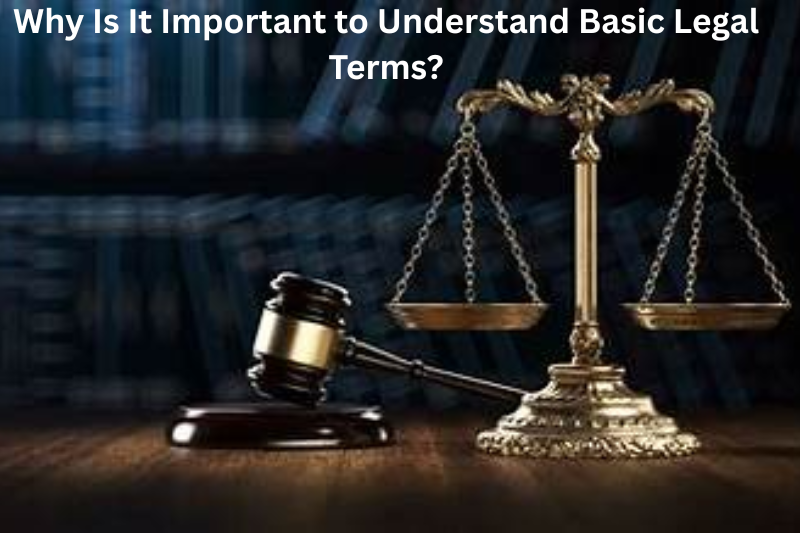
Legal terminology appears in many situations, including employment agreements, property transactions, consumer disputes, and court proceedings. Understanding common terms can help you recognize what a document means before deciding what to do next.
Here are some important benefits of learning legal vocabulary:
- Understand legal documents: Recognize the meaning of common words used in contracts, notices, and agreements.
- Know your rights and responsibilities: Better understand legal obligations and the possible consequences of certain actions.
- Communicate more effectively: Ask clearer questions when speaking with a lawyer or legal adviser.
- Recognize potential problems: Identify clauses or statements that may require closer attention.
- Follow legal news: Understand common references to lawsuits, judgments, appeals, and criminal cases.
Learning legal terms does not replace professional advice, but it gives you a useful foundation for making informed decisions.
25 Basic Law Terms Every Beginner Should Know
The following definitions introduce common legal words in straightforward language. Their precise meanings may vary depending on the country, jurisdiction, and legal context.
| Legal term | Simple definition | Example |
|---|---|---|
| Law | Rules recognized and enforced by a legal system. | Traffic laws regulate how people use roads. |
| Legal right | A right recognized or protected by law. | A tenant may have legally protected rights to safe housing. |
| Obligation | A legal duty to do something or refrain from doing something. | A borrower may be obligated to repay a loan. |
| Liability | Legal responsibility for an action, loss, or obligation. | A business may be liable for certain damages caused by its negligence. |
| Contract | An agreement that creates legally enforceable obligations when applicable requirements are met. | A signed service agreement may establish duties for both parties. |
| Agreement | A shared understanding between two or more parties. | Two people agree on the terms of a sale. |
| Plaintiff | A party who brings a civil lawsuit in jurisdictions using this term. | A customer sues a company over an alleged breach of contract. |
| Defendant | A party against whom a lawsuit or criminal charge is brought. | A person responds to a civil claim or faces a criminal charge. |
| Claim | An assertion of a legal right or a request for a legal remedy. | A person makes a claim for compensation after an accident. |
| Evidence | Information or material used to establish or challenge facts in a legal proceeding. | Emails may help establish what the parties agreed to. |
| Witness | A person who provides information about relevant events or facts. | A witness describes what they observed during an accident. |
| Testimony | A statement given by a witness, often under oath or affirmation. | A witness answers questions in court. |
| Verdict | A formal decision on the issues submitted to a jury or other decision-making body, depending on the system. | A jury returns a verdict in a criminal trial. |
| Judgment | A court’s formal decision or order resolving an issue or dispute. | A court issues a judgment in a contract dispute. |
| Appeal | A request for a higher court or authorized body to review a decision. | A party challenges a court decision through an appeal. |
| Bail | A legal arrangement that may allow an accused person to remain out of custody while a case proceeds, subject to applicable conditions. | A court grants bail under specified conditions. |
| Arrest | The lawful taking of a person into custody by an authorized person or authority. | Police arrest a suspect under applicable legal powers. |
| Warrant | An authorization issued by a legally empowered authority, often a court. | A search warrant authorizes a search within its lawful scope. |
| Negligence | A failure to exercise the legally required standard of care. | A careless act may cause an injury and give rise to a negligence claim. |
| Fraud | Deception that meets the legal requirements for fraud in the relevant context. | A person deliberately uses false information to obtain money. |
| Consent | Agreement or permission given voluntarily where the law requires it. | A person gives informed consent to a procedure. |
| Damages | Money awarded or claimed to compensate for a legally recognized loss or injury. | A court awards damages for proven losses. |
| Injunction | A court order requiring someone to do something or stop doing something. | A court orders a party to stop using disputed property. |
| Jurisdiction | The legal authority of a court or other body to hear a matter or exercise power. | A court determines whether it has authority to hear a dispute. |
| Precedent | An earlier judicial decision that may guide or bind decisions in later cases. | A court considers a relevant decision from an earlier case. |
These terms form a useful starting point for understanding legal conversations and documents. However, always consider the context in which a term appears because legal definitions are not identical everywhere.
Understanding the Main Types of Law
Before studying more advanced vocabulary, it helps to understand the main areas of law. Each area deals with different types of rights, duties, and disputes.
1. Criminal Law
Criminal law concerns conduct defined as criminal offenses by the applicable legal system. These offenses may include theft, assault, fraud, and other prohibited acts.
Common criminal law terms include:
- Offense: Conduct prohibited by criminal law.
- Prosecution: The process of bringing and presenting a criminal case against an accused person.
- Accused: A person alleged to have committed an offense.
- Conviction: A formal finding of guilt under the applicable legal process.
- Acquittal: A finding that the accused has not been proven guilty under the applicable standard.
For example, if someone is accused of theft, the prosecution must establish the required elements of the offense under the applicable rules of evidence and standard of proof.
An accusation alone does not establish guilt.
2. Civil Law
Civil law, in this context, refers to legal disputes between individuals, businesses, or other parties rather than criminal prosecutions. It can involve property, contracts, personal injuries, and other private rights.
Common terms include:
- Dispute: A disagreement that may involve a legal issue.
- Settlement: An agreement that resolves some or all of a dispute.
- Compensation: Payment intended to address a loss or injury.
- Remedy: A legal solution available when a right has been violated.
- Breach: A failure to meet a legal duty or contractual obligation.
For example, if a contractor fails to complete work as promised, the customer may bring a civil claim seeking an appropriate remedy.
3. Constitutional Law
Constitutional law deals with the meaning, interpretation, and application of a country’s constitution. It may address government powers, the relationship between institutions, and protected rights.
Important terms include:
- Constitution: The fundamental legal framework of a state.
- Fundamental rights: Rights specifically protected by a constitution or other applicable legal framework.
- Separation of powers: The division of government authority among different branches or institutions.
- Judicial review: The examination of the legality or constitutionality of government action by a court or authorized body.
For example, a constitutional dispute might concern whether a government action violates a right protected by the constitution.
4. Contract Law
Contract law concerns agreements that may create legally enforceable obligations. It is relevant to employment, business transactions, property arrangements, and many service relationships.
Key terms include:
- Offer: A proposal to enter into an agreement on specified terms.
- Acceptance: Agreement to an offer in a legally effective manner.
- Consideration: Something of legal value exchanged between parties in systems that require it for contract formation.
- Breach of contract: Failure to perform a contractual obligation without an adequate legal justification.
- Termination: Bringing a contract or legal relationship to an end, according to applicable rules.
For example, a company may agree to pay a freelancer for a completed project. If one party fails to perform an enforceable contractual obligation, the other party may have legal options depending on the agreement and governing law.
5. Family Law
Family law addresses legal issues involving family relationships. Depending on the jurisdiction, it may cover marriage, divorce, child arrangements, adoption, and financial support.
Common terms include:
- Custody: Legal arrangements concerning a child’s care and decision-making, as defined by the applicable system.
- Guardianship: Legal authority or responsibility to care for another person or manage specified affairs.
- Maintenance: Financial support that may be legally required in certain family relationships.
- Adoption: A legal process that establishes a parent-child relationship.
- Divorce: The legal dissolution of a marriage.
Family law rules differ considerably between countries, so local legal guidance is particularly important in these matters.
Common Court and Legal Procedure Terms
Court-related language can be confusing because similar words may describe different stages of a legal case.
Case
A case is a legal matter brought before a court or another authorized decision-making body.
Example: A dispute between a landlord and tenant may become a court case if it cannot be resolved informally.
Lawsuit
A lawsuit is a legal proceeding in which a party seeks a civil remedy through a court.
Example: A business may file a lawsuit to recover money allegedly owed under a contract.
Petition
A petition is a formal request submitted to a court or another authority. Its meaning and procedural requirements depend on the legal system.
Motion
A motion is a request asking a court to make a particular ruling or order during a proceeding.
Example: A party may ask the court to exclude certain evidence or extend a deadline.
Hearing
A hearing is a proceeding in which a court or other authorized body considers arguments, evidence, or a specific legal issue.
Trial
A trial is a formal process for examining a case and determining disputed issues of fact or law under the applicable procedure.
Order
An order is a direction or decision issued by a court or another authorized body.
Decree
A decree is a formal judicial decision or order, particularly in legal systems or proceedings that use this term for certain matters.
How These Terms Fit Together
Consider a simple civil dispute involving an unpaid invoice:
- A service provider claims that a customer failed to pay an agreed fee.
- The provider may send a demand letter requesting payment.
- If the dispute remains unresolved, the provider may file a claim or lawsuit where legally appropriate.
- The parties may exchange evidence and attend hearings.
- They might reach a settlement or proceed to trial.
- The court may issue a judgment or order if it decides the matter.
This example is simplified. Actual procedures, deadlines, and available remedies depend on local law.
Essential Contract and Business Law Vocabulary
Contracts often contain legal expressions that can affect financial and professional responsibilities. Beginners should pay particular attention to the following terms.
Terms and Conditions
These are the rules, responsibilities, and limitations governing an agreement or service.
Before accepting terms and conditions, look for payment requirements, cancellation rules, renewal provisions, and dispute procedures.
Confidentiality
Confidentiality concerns protecting information from unauthorized disclosure. Contractual confidentiality duties may apply to business information, personal information, or other specified material.
Indemnity
An indemnity is a promise to compensate another party for certain losses or liabilities covered by the agreement. Its effect depends on the wording and applicable law.
Warranty
A warranty is an assurance or commitment concerning a product, service, or particular condition. Warranties may arise from contracts or applicable consumer laws.
Default
Default generally means failing to meet a required obligation, such as making a payment when due.
Force Majeure
A force majeure clause addresses specified exceptional events that may affect a party’s ability to perform contractual obligations. Its effect depends on the clause’s wording and governing law.
Practical tip: Before signing an agreement, read the entire document, check important deadlines, understand cancellation conditions, and ask a qualified professional about unclear or high-risk clauses.
Important Legal Terms Related to Rights and Responsibilities
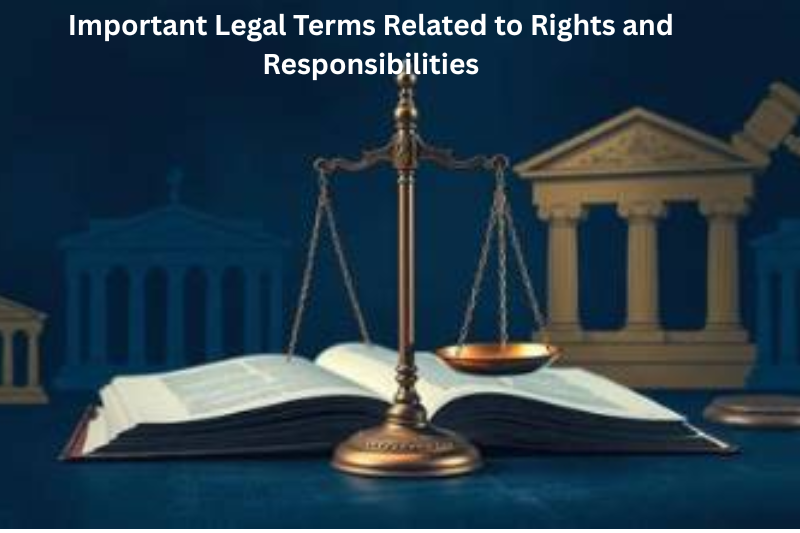
Knowing the difference between similar legal concepts can prevent misunderstandings.
Right vs. Obligation
A right is something the law recognizes or protects. An obligation is a duty that a person or organization must fulfill.
For example, an employee may have a legal right to certain wages and an obligation to follow lawful workplace requirements.
Liability vs. Guilt
Liability usually refers to legal responsibility, often in civil matters, although the word has broader applications. Guilt refers to responsibility for a criminal offense as determined through the applicable legal process.
A person may be civilly liable without having committed a crime.
Evidence vs. Proof
Evidence is information or material presented to establish facts. Proof refers to establishing a fact or proposition to the standard required in the particular proceeding.
Not every piece of evidence is accepted by a court, and the weight given to evidence depends on the circumstances.
Mediation vs. Litigation
Mediation is a process in which a neutral third party helps people attempt to resolve a dispute. The mediator generally does not impose a decision.
Litigation involves resolving a dispute through court proceedings.
Mediation may be less formal than litigation, but whether it is suitable depends on the dispute and the parties’ circumstances.
Legal Advice vs. Legal Information
Legal information explains general rules, definitions, or procedures. Legal advice applies the law to a particular person’s facts and circumstances and recommends a course of action.
For example, explaining what a contract is provides legal information. Advising whether a particular contract should be signed requires consideration of the specific circumstances and applicable law.
How to Read a Legal Document as a Beginner
Legal documents can seem intimidating, but a systematic approach makes them easier to understand.
Follow these steps when reviewing a document:
- Identify the document type. Determine whether it is a contract, notice, court order, agreement, or another legal document.
- Identify the parties. Check who is involved and what role each person or organization has.
- Find the main purpose. Look for the document’s central objective and the obligations it creates.
- Review important dates. Note payment dates, deadlines, renewal periods, and response requirements.
- Highlight unfamiliar terms. Look up their meanings, while checking how they are used in the specific document.
- Check responsibilities and consequences. Identify what each party must do and what may happen if an obligation is not fulfilled.
- Ask questions before signing. Seek clarification about unclear terms, financial commitments, or significant legal risks.
- Keep a copy. Store the signed document and relevant correspondence safely.
Never assume that a document is harmless simply because it is short or written in plain English. Some clauses can create important legal obligations.
You may also like to read these posts:
How to Handle Legal Issues: A Practical Guide to Protecting Your Rights
Basic Legal Process Guide: Understanding Legal Procedures Step by Step
How to File a Legal Complaint: Step-by-Step Guide
How to Prepare for Court: A Practical Guide
Legal Guide for Beginners: Understanding Your Rights and the law
How to Learn Law Terms More Effectively
You can build your legal vocabulary gradually without memorizing an entire legal dictionary.
Start With Everyday Legal Situations
Learn terms connected to common experiences, such as renting a home, buying goods, starting a job, signing a contract, or resolving a disagreement.
Familiar examples make abstract legal concepts easier to remember.
Create a Personal Legal Glossary
Keep a notebook or digital document with three columns:
| Term | Meaning in simple English | Example |
|---|---|---|
| Liability | Legal responsibility | A company may be responsible for certain losses. |
| Jurisdiction | Legal authority over a matter | A court checks whether it can hear a case. |
| Injunction | A court order requiring or preventing an action | A party is ordered to stop a particular activity. |
| Breach | Failure to meet an obligation | A supplier does not deliver goods as agreed. |
| Appeal | Request for review of a decision | A party asks a higher court to review a ruling. |
Add a few words each day and revisit them regularly.
Use Reliable Learning Resources
Useful places to begin include:
- Official government websites that publish legislation and legal guidance.
- Court websites explaining procedures and frequently asked questions.
- University law resources and introductory legal textbooks.
- Official legal aid services that provide public legal information.
- Legal dictionaries that explain terms and identify jurisdiction-specific meanings.
Prefer resources relevant to your country. A definition drawn from one legal system may not apply in another.
Practice With Realistic Examples
Instead of memorizing the word breach, imagine a supplier failing to deliver goods as promised. Instead of memorizing jurisdiction, consider whether a particular court has authority to hear a dispute.
Connecting terminology to situations helps you understand how legal concepts work together.
Common Mistakes Beginners Should Avoid
Learning legal language is easier when you recognize some common misconceptions.
Assuming Every Country Uses the Same Laws
Legal systems differ in their rules, procedures, terminology, and institutions. A term may have a different meaning or legal effect in another country.
Always identify the jurisdiction before relying on legal information.
Treating an Accusation as Proof
An allegation is a claim that something happened or that someone did something wrong. It is not automatically an established fact.
Legal proceedings apply specific rules and standards to determine what has been proven.
Confusing Signing With Understanding
Signing a document may create significant obligations. Do not sign simply because another person says a clause is standard or unimportant.
Read the document and obtain appropriate advice when necessary.
Relying on Outdated Information
Legislation, regulations, and court procedures can change. An old article or online discussion may no longer reflect current requirements.
Check official and up-to-date sources before taking action.
Trying to Handle Every Legal Problem Alone
General legal knowledge is useful, but complicated disputes, criminal allegations, immigration issues, and significant financial or family matters may require professional assistance.
If you receive a court document or formal legal notice, check any response deadline promptly.
Frequently Asked Questions
1. What are basic law terms for beginners?
Basic law terms for beginners are common legal words used to explain rights, responsibilities, court proceedings, agreements, and disputes. Examples include contract, liability, plaintiff, defendant, evidence, judgment, appeal, and jurisdiction.
2. What is the easiest way to understand legal terminology?
Start with simple definitions and real-life examples. Study a few terms each day, write them in your own words, and review how they appear in contracts, court documents, and official legal guidance.
3. What is the difference between civil law and criminal law?
In this context, civil law generally addresses disputes involving private rights and obligations, while criminal law concerns offenses prosecuted under the criminal justice system. The parties, procedures, standards of proof, and possible outcomes can differ.
4. What is the difference between a plaintiff and a defendant?
In legal systems that use these terms, a plaintiff generally brings a civil lawsuit, while a defendant responds to the lawsuit. In criminal proceedings, the defendant is the person charged with an offense.
5. What does liability mean in law?
Liability means legal responsibility for an obligation, loss, or action. For example, a person or business may be liable for damages if the relevant legal requirements are established.
Conclusion
Learning basic law terms for beginners is a practical first step toward understanding legal documents, recognizing rights and responsibilities, and following common legal proceedings. Start with essential words such as contract, liability, evidence, jurisdiction, judgment, and appeal, then build your knowledge through examples and reliable educational resources.
Remember that legal terminology and procedures can vary between jurisdictions. Use official sources to verify important information, pay attention to deadlines, and seek qualified legal advice when a situation requires an assessment of your specific circumstances. With consistent practice, you can develop a stronger understanding of legal language and approach everyday legal questions with greater confidence.