
Table of Contents
Understanding how laws work helps people make informed decisions, understand their rights, and recognize their responsibilities in society. Laws establish rules for individuals, businesses, and governments. They help maintain public order, protect people’s freedoms, resolve disputes, and provide consequences when rules are broken. Although legal systems differ between countries, most follow a process in which laws are created, interpreted, applied, and enforced.
In this guide, you will learn how a proposal becomes a law, who makes and enforces laws, how courts interpret legal rules, and what happens when someone breaks the law. Simple examples will help explain the legal system without requiring a legal background.
What Are Laws and Why Do They Matter?
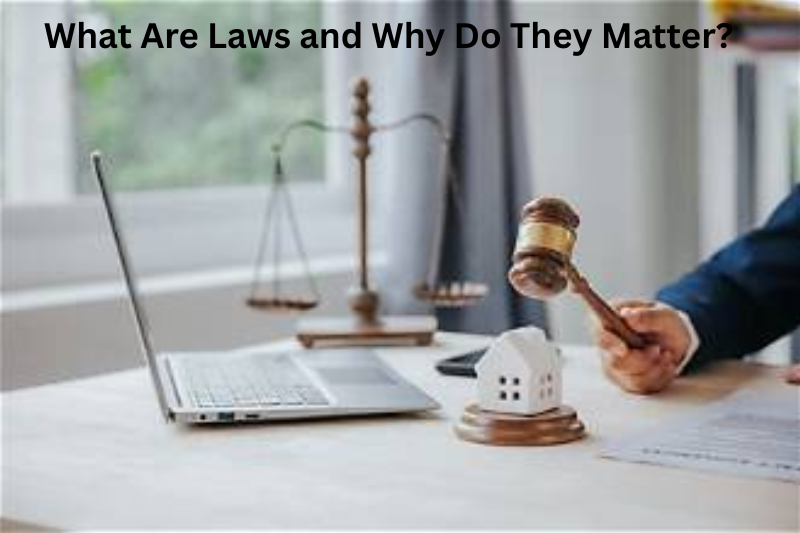
Laws are rules recognized and enforced by a government or another legally authorized institution. They regulate behavior, establish legal rights and duties, and provide ways to resolve conflicts.
For example, traffic laws tell drivers how to use roads safely, contract laws establish rules for agreements, and criminal laws identify offenses that can lead to prosecution and penalties.
Laws serve several important purposes:
- Protect rights: They help safeguard individual freedoms, property, and personal safety.
- Maintain public order: They establish standards for acceptable behavior.
- Resolve disputes: They provide procedures for addressing disagreements between people, businesses, or public authorities.
- Set responsibilities: They explain what individuals and organizations must or must not do.
- Limit government power: Constitutional and other legal rules can restrict how public authorities exercise their powers.
- Promote accountability: They establish procedures for investigating wrongdoing and applying lawful consequences.
A key point is that not every rule is a law. School policies, workplace guidelines, and social customs may influence behavior, but their legal status and consequences differ from those of laws.
How Laws Work: The Basic Legal Process
The legal process generally involves several connected stages. The exact procedures depend on the country’s constitution, government structure, and legal traditions.
1. A problem or need is identified
Lawmakers, public officials, organizations, or citizens identify an issue that may require a legal solution.
2. A bill is prepared
A proposed law, usually called a bill, is drafted and introduced through the appropriate legislative process.
3. The proposal is reviewed and approved
The legislature examines, debates, and votes on the bill. Other constitutional steps may also be required.
4. The law takes effect
After the required approval and publication procedures, the law becomes effective on the date established by the relevant rules.
5. Authorities apply and enforce it
Relevant agencies, regulators, police, or other authorized bodies implement the law within their legal powers.
6. Courts interpret and review it when needed
Courts resolve legal disputes, interpret unclear provisions, and determine whether the law has been applied lawfully in a particular case.
These stages do not always happen in a single, straightforward sequence. Laws can be challenged, amended, repealed, or reviewed by courts, depending on the applicable legal system.
Who Makes, Enforces, and Interprets Laws?
No single person usually performs every legal function. Different institutions have different responsibilities, and their powers depend on the country’s legal framework.
1. The legislature makes laws
The legislature is the body responsible for passing laws. Depending on the country, it may be called a parliament, congress, or legislative assembly.
Its responsibilities can include:
- Introducing and considering bills.
- Debating proposed legal changes.
- Reviewing amendments.
- Voting on legislation.
- Monitoring aspects of government activity.
In some systems, a legislature has one chamber; in others, it has two. The approval process varies accordingly.
2. The executive implements laws
The executive branch includes the head of government and the public departments or agencies responsible for administering the law.
Its duties may include implementing legislation, developing policies, issuing legally authorized regulations, and managing public services.
For example, a transport authority may administer vehicle registration requirements established by legislation. However, an executive agency cannot automatically create any rule it wishes; it must act within the powers granted by law.
3. Courts interpret and apply laws
Courts decide cases by examining the relevant legal rules and the facts presented as evidence. Judges may need to interpret the wording of a law, consider earlier court decisions, or determine whether a public authority acted lawfully.
For example, if two businesses disagree about a contract, a court may examine the agreement, the evidence, and the applicable contract law to decide the dispute.
Courts may also review whether legislation or government action complies with a constitution, where the legal system gives them that authority.
4. Police and regulatory bodies enforce the law
Police investigate suspected crimes and exercise powers granted by law. Regulatory bodies oversee particular activities, such as workplace safety, environmental protection, financial services, or transport.
Enforcement does not mean that every suspected violation automatically results in punishment. The applicable procedures, evidence, legal standards, and rights of the people involved must be considered.
How Does a Bill Become a Law?
A bill is a formal proposal for a new law or a change to an existing law. The process of turning a bill into legislation depends on the country’s constitution and legislative procedures.
Step 1: Identifying a legal problem
A government may identify a problem that existing laws do not address adequately. Citizens, professional groups, public consultations, research, or major events may also influence the decision to consider new legislation.
For example, an increase in road accidents might lead lawmakers to consider changes to traffic safety requirements.
Step 2: Drafting the bill
The proposed legislation is written in legal language. A bill typically describes the problem it addresses, the rules it would establish, and how those rules would operate.
Drafting is important because unclear wording can create confusion about what people must do and how authorities should apply the law.
Step 3: Debate and legislative review
The bill is examined by the relevant legislative body. Lawmakers may discuss its purpose, consider its effects, propose amendments, and consult experts or members of the public.
Some bills also undergo committee reviews before reaching a final vote.
Step 4: Voting and required approval
The legislature votes according to the applicable procedure. Depending on the system, a bill may need approval from one or more chambers, the head of state, or another constitutionally designated authority.
A proposal does not become law simply because someone introduces it or supports it publicly.
Step 5: Publication and commencement
Once the required formalities are completed, the legislation is generally published through an official channel. It may take effect immediately, on a specified future date, or after another legally prescribed step.
Important: The date a law is passed and the date it becomes effective are not necessarily the same.
What Are the Different Types of Laws?
Legal systems contain different kinds of rules. Understanding their differences helps explain why some legal issues are handled by courts, while others involve government agencies or specialized tribunals.
| Type of law | What it generally covers | Simple example |
|---|---|---|
| Constitutional law | Government structure, powers, and fundamental rights | A dispute over constitutional rights |
| Criminal law | Offenses against the public order and the consequences established for them | Theft or assault |
| Civil law | Disputes involving individuals, businesses, and legal obligations | A disagreement over unpaid money |
| Administrative law | The powers and decisions of public authorities | Challenging an agency’s decision |
| Contract law | Agreements and the rights and duties they create | A dispute over a service agreement |
| Family law | Legal matters involving marriage, children, and family relationships | A child custody dispute |
| Property law | Ownership, use, and transfer of property | A disagreement over land ownership |
| Regulatory law | Rules governing particular industries or activities | Workplace safety requirements |
These categories can overlap. For example, one event might lead to a criminal investigation and a separate civil claim for compensation.
The meaning of a particular category can also differ across countries. In some legal traditions, civil law refers more broadly to a legal system based primarily on codified legislation, rather than only to disputes between private parties.
How Do Courts Decide Whether Someone Has Broken the Law?
Courts do not decide cases simply by deciding who seems right or wrong. They follow legal procedures and apply the relevant rules to the available evidence.
1. A legal issue arises
A person may be accused of committing an offense, a business may allege a breach of contract, or someone may challenge a government decision.
The appropriate procedure depends on the nature of the dispute.
2. Evidence is examined
Evidence may include documents, witness testimony, photographs, recordings, expert opinions, or other material permitted by law.
Courts consider whether the evidence is relevant, reliable, and legally admissible. Different types of cases can have different rules about what must be proved and by whom.
3. The relevant law is applied
The judge, and in some cases a jury or another authorized decision-maker, considers the applicable law and the established facts.
For example, a contract dispute may require the court to determine whether a valid agreement existed, what its terms meant, and whether either party failed to meet its obligations.
4. A decision is made
The court reaches a decision based on the applicable legal standards. Depending on the case, the result may include a finding of liability, a criminal conviction or acquittal, compensation, an injunction, or another legally authorized remedy.
5. An appeal may be available
A party may be able to appeal a decision if the relevant legal requirements are met. An appeal is not automatically a complete retrial; the reviewing court’s role depends on the applicable rules and the grounds of appeal.
This process helps explain how laws work in practice: written rules provide a legal framework, while courts resolve specific disputes under that framework.
What Happens When Someone Breaks the Law?
The consequences of breaking a law depend on the type of violation, the evidence, the applicable legal provisions, and the circumstances of the case.
Possible outcomes include:
- Warnings: An authority may issue a warning where the law permits.
- Fines: A person or organization may be required to pay a financial penalty.
- Compensation: A court may order someone to compensate another person for legally recognized harm.
- Corrective orders: An authority or court may require a person or business to stop an unlawful activity or correct a violation.
- Criminal penalties: Depending on the offense and legal system, a conviction may result in a fine, probation, imprisonment, or another authorized sentence.
Not every violation is a crime, and not every accusation leads to a penalty.
A person accused of an offense generally has important procedural rights, which may include the right to legal representation, a fair hearing, and the presumption of innocence in criminal proceedings. The precise rights and procedures depend on the jurisdiction.
If you receive a legal notice, court summons, or official demand, do not ignore it. Check the deadline, keep relevant documents, and seek qualified legal advice if you are unsure how to respond.
How Do Laws Change Over Time?
Laws are not necessarily permanent. Governments and legislatures may change them to respond to new circumstances, correct problems, or update outdated provisions.
Common ways laws change include the following:
Amendments
An amendment changes part of an existing law. For example, lawmakers might revise reporting requirements or update a legal definition.
Repeal
Repeal removes a law or a specific provision from the legal framework, subject to the relevant legal process.
New legislation
A legislature may introduce a new law to address an issue that existing legislation does not adequately cover.
Court interpretation and constitutional review
Courts may clarify the meaning of legal provisions when deciding disputes. In systems that authorize judicial review, courts may also determine that a law or government action conflicts with the constitution.
A court’s interpretation does not always change the written wording of legislation, but it can affect how that legislation is understood and applied.
Regulations and delegated legislation
Legislatures sometimes authorize government departments or other bodies to make more detailed rules under an existing law. These are often called regulations, rules, or delegated legislation.
Such rules must remain within the authority granted to the body that makes them and comply with applicable legal requirements.
You may also like to read these posts:
How to Handle Legal Issues: A Practical Guide to Protecting Your Rights
Basic Legal Process Guide: Understanding Legal Procedures Step by Step
How to File a Legal Complaint: Step-by-Step Guide
How to Prepare for Court: A Practical Guide
Legal Guide for Beginners: Understanding Your Rights and the law
Why Do Laws Differ Between Countries?
A law that applies in one country may not apply in another. Even countries with similar legal traditions can have different rules and procedures.
Several factors explain these differences:
- Constitutional structure: Countries distribute legislative and executive powers differently.
- Legal traditions: Some systems rely heavily on codes and statutes, while others give a significant role to judicial precedent alongside legislation.
- Local priorities: Governments establish rules to address their societies’ particular needs and circumstances.
- International obligations: Treaties and other international commitments may influence domestic law, depending on how they operate within the country’s legal system.
- Regional authority: States, provinces, or local governments may have lawmaking powers in federal or decentralized systems.
For this reason, it is important to identify the correct jurisdiction before relying on a legal explanation. A general overview can explain legal principles, but it cannot establish the answer to every specific legal question.
How to Find and Understand the Law That Applies to You
If you need to understand a law related to your work, property, family, business, or personal rights, follow a practical research process.
- Identify the jurisdiction. Determine which country, state, province, or local authority governs the issue.
- Find the primary legal source. Look for the relevant statute, regulation, constitutional provision, or official court decision.
- Check the current version. Confirm that the provision is still in force and check any amendments and commencement dates.
- Read the relevant definitions and exceptions. A rule may have conditions, exemptions, or special procedures that affect how it applies.
- Review official guidance and relevant decisions. These may help explain how the rule is administered or interpreted.
- Seek legal advice when necessary. A qualified lawyer can assess how the law applies to your particular facts and explain available options.
Prefer official government legislation databases, official gazettes, court websites, and relevant regulatory authorities over social media posts or outdated summaries.
Online explanations can be useful starting points, but they should not replace checking the actual legal source when a decision has important consequences.
Frequently Asked Questions About How Laws Work
1. Who has the power to make laws?
In most countries, the legislature has the primary responsibility for passing laws. Depending on the constitutional system, other authorities may have roles in approving legislation or making regulations under delegated powers.
2. How long does it take for a law to be passed?
There is no single timeline. Some bills pass relatively quickly, while others require extensive debate, committee review, amendments, and multiple approvals. The process also depends on the country’s legislative rules.
3. Can a law be changed after it is passed?
Yes. A law may be amended or repealed through the appropriate legal process. Courts may also interpret its provisions or, where authorized, review its constitutionality.
4. What is the difference between a law and a regulation?
A law commonly refers to legislation enacted by a legislature, although the term has broader meanings in some contexts. A regulation is often a more detailed rule made by an authorized government body under powers granted by legislation. Both may have legal force, but their authority and scope differ.
5. What happens if someone disagrees with a law?
People may express opposition, participate in public debate, contact their representatives, or advocate lawful reform. If they believe a law has been applied unlawfully or violates constitutional protections, they may have legal options to challenge it, depending on the jurisdiction.
Conclusion
Understanding how laws work makes it easier to recognize your rights, fulfill your responsibilities, and understand how governments and courts make decisions. Laws generally move through a process of creation, approval, implementation, interpretation, and enforcement, although the details differ between legal systems. By consulting reliable legal sources, checking the rules that apply in your jurisdiction, and seeking professional advice when necessary, you can make better-informed decisions and navigate legal issues with greater confidence.